Priority directions of the laboratory
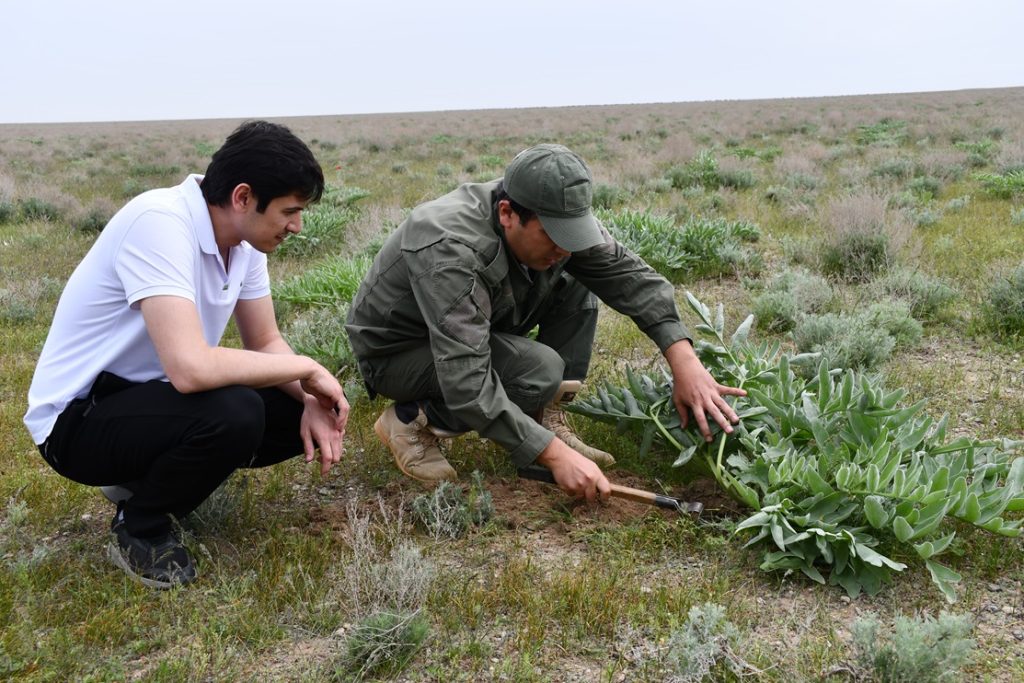
2. Assessment of the current state of populations of rare and endangered species of the natural flora of Uzbekistan.
3. Development of GIS maps reflecting the distribution and vitality status of cenotic populations of research objects.
4. Creation of a living collection of rare and endangered plant species.
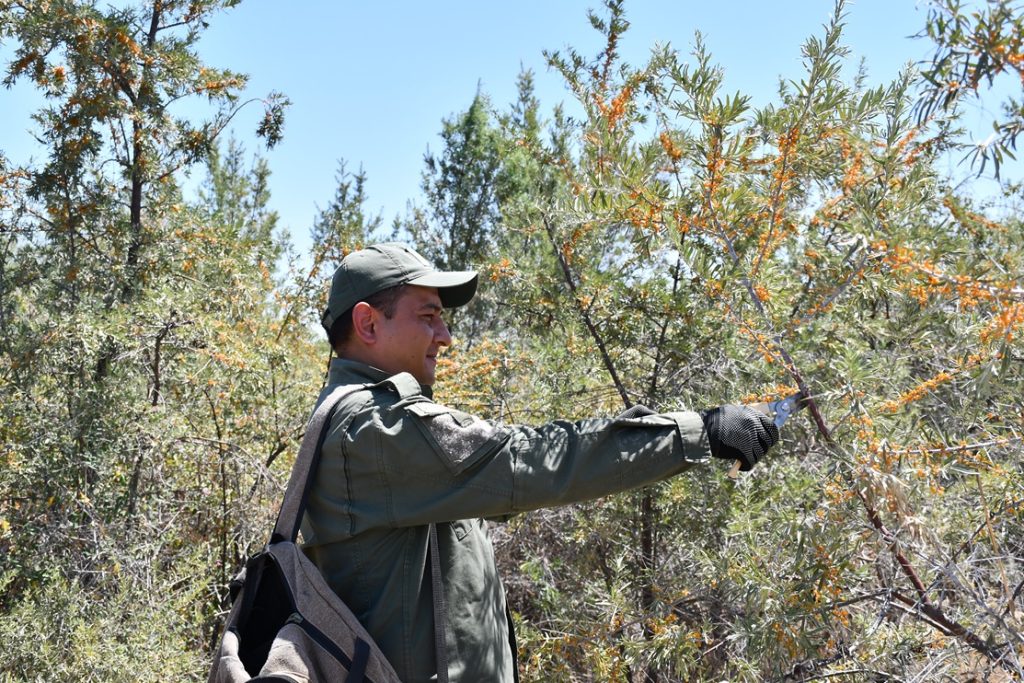
5. Study of the current state of resource-based species in Central Uzbekistan.
6. Development of scientific foundations for establishing plantations of promising species in Central Uzbekistan based on intensive technologies.
Achievements of the laboratory
For the first time, a comprehensive list of 224 species of wild ancestors of cultivated plants in the flora of Uzbekistan—belonging to 29 families and 119 genera has been compiled.
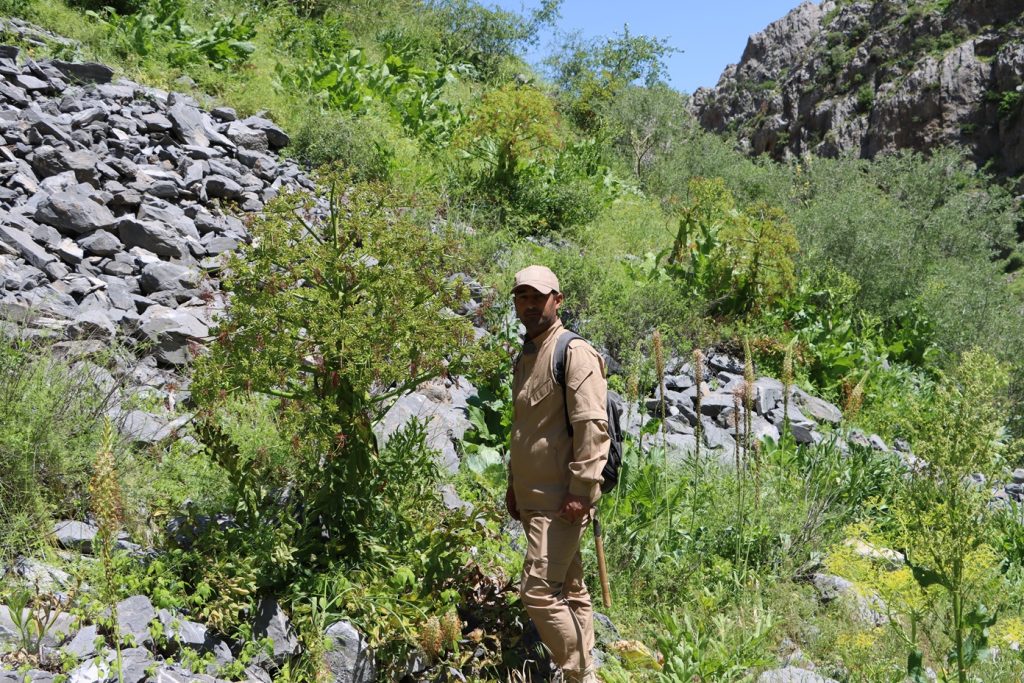
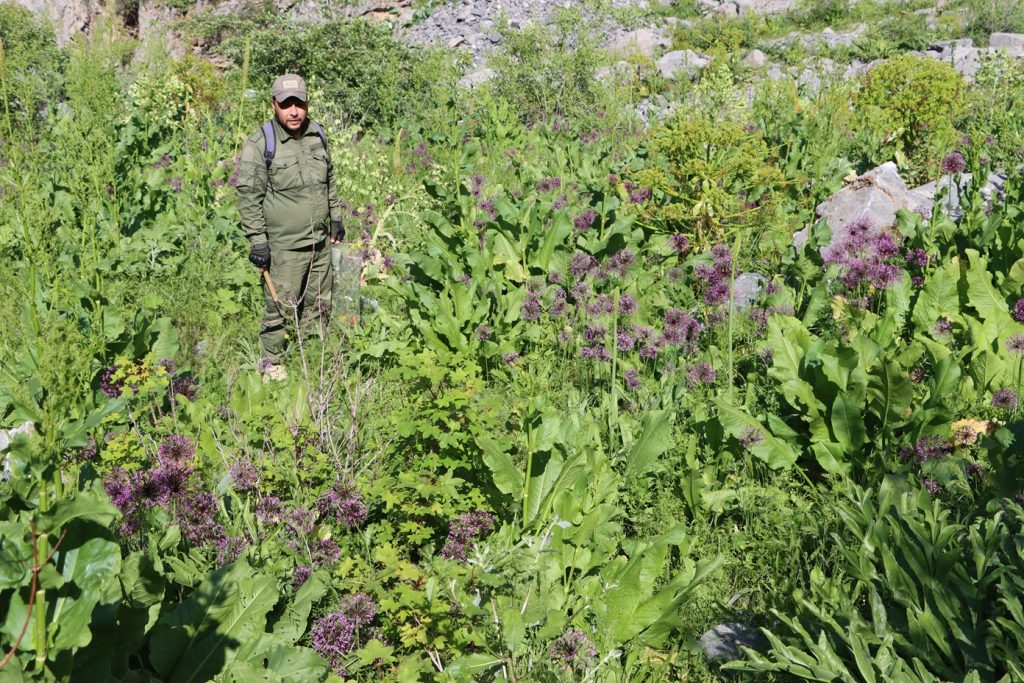
The current state of 345 coenotic populations has been assessed, including: 20 species of the Amaryllidaceae family; 28 species of the Liliaceae family; 99 species of the Poaceae family; 79 species of the Fabaceae family (all of significant economic importance); 46 species included in the annual quota; 73 species of trees and shrubs.
Wild Ancestors of Cultivated Plants species were categorized based on their economic importance into food, vitamin-rich, forage, medicinal, industrial, melliferous (honey-producing), ornamental, dye-yielding, toxic, and essential oil-bearing groups. Analysis revealed that the majority of these species are extensively used as forage (144 species), medicinal (87 species), and food (79 species) plants.
Based on ontogenetic structure and vitality indicators, the structures of 51 coenopopulations belonging to 9 rare plant species included in the Red Data Book of the Republic of Uzbekistan were elucidated, and their current status was assessed as optimal, pessimal, or critical.
Furthermore, the natural resource areas and annual sustainable harvest quotas were determined for several economically significant species, including: forage plants (Poa bulbosa L., Hordeum bulbosum L.), medicinal plants (Cichorium intybus L., Inula grandis Schrenk ex Fisch. & C.A.Mey, Inula helenium L.), food plants (Crataegus chlorocarpa Lenne & K.Koch., Malus domestica (Suckow) Borkh).
The potential distributions of rare and narrow-range species within our flora—including Tulipa greigii, T. kaufmanniana, T. fosteriana, T. tubergeniana, Allium pskemense, A. praemixtum, A. oschaninii, Agropyron fragile, Elymus dahuricus, Secale sylvestre, Cicer grande, Elwendia persica, Malacocarpus crithmifolius, Crataegus chlorocarpa, and Malus domestica—were modeled under various climate change scenarios.
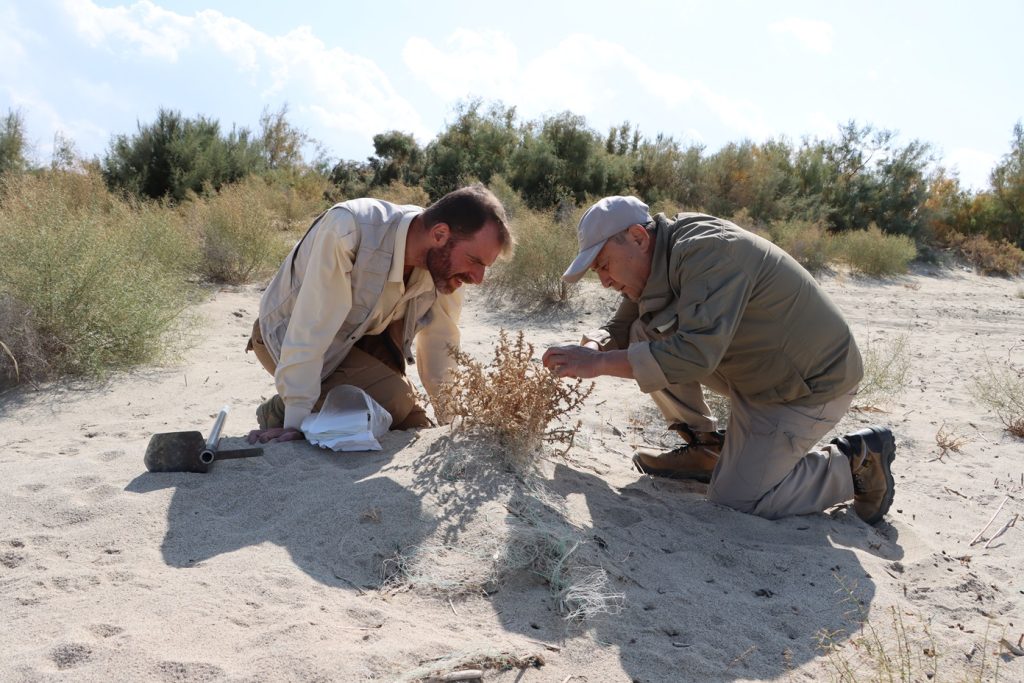
At the collection site of the Kyzylkum Desert Biological Station, collection plots have been established featuring over 20 species of wild ancestors of cultivated plants that are widely distributed in the arid regions of Uzbekistan, as well as other economically significant species.
For the first time, an electronic database of the wild ancestors of cultivated plants has been developed. This database includes comprehensive information on their scientific (Latin), Uzbek, and Russian names, their distribution across the republic, economic importance, botanical description, ecology, current status of resources, and general distribution ranges.
The “DIGITAL NATURE” State Program: Studying the current status of resource-based species in Central Uzbekistan and developing the scientific foundations for establishing plantations of promising species based on intensive technologies (2025–2029).
A list of 529 species belonging to 70 families and 269 genera with economic significance has been compiled for the Nurata Range and its adjacent areas in the Navoi region. These species were categorized into four groups based on their resource characteristics, utilization level, life forms, raw material types, and annual demand. Using grid-based mapping, digital maps reflecting the diversity of resource species distributed in Central Uzbekistan were generated. The study area was divided into 429 grid cells (10×10 km); the highest species diversity was observed in 15 cells, where a total of 65 species were recorded.
In cooperation with the Forestry Agency, a 20-hectare plantation of Kochia Roth., Halostachys C.A. Mey., Anabasis (Schrenk) Benth. was established in the Kyzylkum State Forestry Department (Romitan district, Kyzylravot neighborhood). Additionally, to develop an experimental plantation model for forage plants, a 1-hectare site was organized in the Kyzylcha village of the Nurata district. In the initial phase, more than 500 seedlings of species with high economic value, such as Crataegus L, Pistacia L, and Rosa L were planted.
Information about the researchers

Abduraimov Ozodbek Sultonqulovich
d.b.s., Senior Researcher, Head of the laboratory of cadastre of natural plant resources and population biology.
E-mail: ozodbek88@bk.ru

Mahmudov Azizbek Valijonovich
PhD, Senior Researcher.
E-mail. azizbek.mahmudov@inbox.ru
Allamurotov Akmal Lola ugli
PhD student
E-mail. allamurotov0225@mail.ru

Mavlanov Bekzod Jurabekovich
PhD student
E-mail: mavlanov.bekzod@mail.ru

Abduraimova Nafisa Kholmukhammat kizi
Junior researcher
E-mail: abduraimovanafisa71@gmail.com

Teshaboev Sultanmurod Qabiljon ugli
Junior researcher
E-mail: sultonteshaboyev@gmail.com

Mamatkasimov Odilbek Turayevich
Junior researcher
Email: odilbek.mamatqosimov.90@mail.ru

Safarov Rizamat Normakhammat ugli
Junior researcher
E-mail: rizamatbek95@gmail.com

Scientific work of the laboratory staff
- Khassanov F.O., Sh. Saribayeva, Esankulov A.S. A new Astragalus species from Uzbekistan // Stapfia, 92 (2010). – P. 25-26 (Germany, Stutgard).
- Habibullo F. Shomurodov, Tashkhanim T. Rakhimova, Shakhnoza U. Saribaeva, Nodira K. Rakhimova, Rasul A. Esov and Bekhzod A. Adilov Perspective Plant Species for Stabilization of Sand. Dunes on the Exposed Aral Sea Bed // Journal of Earth Science and Engineering 3 (2013). USA. P. -655-662
- Shomurodov H.F., Saribaeva Sh.U., Effect of gas extraction on the State of Euphorbia sclerocyathium Korov.et M.Pop. population// Arid land studies. Vol.24.No.1. June 2014. Japan. P. -265-268.
- Habibullo F.Shomurodov., Akbar Akhmedov, Shakhnoza U. Saribayeva Distribution and the current state of Lagochilus acutilobus (Lamiaceae) in connection with the oil and gas sector development in Uzbekistan // Journal of Ecological Questions, – Poland, 2014. – P. 45 – 49.
- Shomurodov H.F., Saribaeva SH.U, Akhmedov A. Distribution Pattern and Modern Status of Rare Plant Specieson the Ustyurt Plateau in Uzbekistan // Arid Ecosystems. 2015. Vol 5. № 4. – Рp. 261-267.
- Saribayeva Sh. U., Shomurodov H.F. Actual state of coenopopulations of Astragalus centralis Sheld. under conditions of Kuldzhuktau ridge (Kyzylkum desert)// Arid Ecosystems. – Moscow, 2017. – Vol. 7. – No. 4. – Р. 256-262.
- Шомуродов Х.Ф., Абдураимов О.С. Онтогенетическая структура и оценка состояния ценотических популяций Tulipa borszczowii (Liliaceae) в Узбекистане // Ботанический журнал. – Санкт-Петербург, 2017. – Т. 102. – №8. – С. 1123-1136.
- Otso Ovaskainen et all., Ozodbek Abduraimov, Azizbek Makhmudov Chronicles of nature calendar, a long-term and large-scale multitaxon database on phenology // A Nature research journal. Scientific data 7. Article number 47. 11 February 2020. (Web of Science 4,18; Scopus 6,40)
- Wenjun Li, Kaiyun Guan, Ozodbek Abduraimov, Ying Feng. Pedicularis multicolor (Orobanchaceae), a new replacement name for the Pedicularis inconspicua. Phytotaxa (2020). 437 (2): 118–118 (Web of Science 1,24; Scopus 1,01).
- Abduraimov O.S., Shomurodov H.F., Daniyarov S.A., Abduraimov A.A. Ontogenetic Structure of Ceоnopopulations of Tulipa korolkowii Regel in Uzbekistan. Journal of Botanical Research, Singapore Volume 02, Issue 04, October 2020 P.7-11
- Delgado M. et al. Abduraimov O., Mahmudov A. Differences in spatial versus temporal reaction norms for spring and autumn phenological events // Proceedings of the National Academy of Sciences of the United States of America (PNAS). 2020. 117 (49) 31249-31258. https://doi.org/10.1073/pnas.2002713117
- Xuehong Xu, Wenjun Li, Ozodbek Abduraimov. Khabibullo Shomurodov, Shukui Ni. Thesium longiperianthium (Santalaceae), a new replacement name for T. brevibracteatum P.C. Tam. Biodiversity Data Journal 8: e59007 doi: 10.3897/BDJ.8. e59007. P.1-4.
- Rakhimova T., Rakhimova N.K., Shomurodov Kh.F., Abduraimov O.S. Ontogenetic structure of rare plant species on the Usturt Plateau in Uzbekistan. Arid Ecosystems, 2020, Vol. 10, No. 3, pp. 238-243.
- Shomurodov H.F., Abduraimov O.S., Adilov B.A. Assessment of the state of Tulipa lehmanniana Mercklin populations under the conditions of the
Kyzylkum Desert. Arid Ecosystems, 2021, Vol. 11, No. 1, pp. 83–90. - Tomas Roslin et al. Ozodbek Abduraimov, Azizbek Mahmudov Phenological shifts of abiotic events, producers and consumers across a continent // Nature climate change. 2021. 11, pp. 241–248. www.nature.com/natureclimatechange.
- Habibullo F. Shomurodov, Shakhnoza U. Saribaeva, Ozodbek S. Abduraimov, Rizamat Sh. Khayitov, Asilbek F. Sayfullaev. The Current State of Iris Hippolyti’s (Vved.) Kamelin Population in Uzbekistan. // Annals of R.S.C.B.. ISSN:1583-6258, Vol. 25, Issue 4, 2021, Pages. 6589 – 6597
- Turdiboev, O. A., Mamatqosimov, O. T., & Celep, F. (2021). Lectotypification of Dracocephalum royleanum (Lamiaceae). Phytotaxa, 512(1), 68-72.
- Khayitov, R.Sh., Shomurodov, H.F., Abduraimov, O.S. and Berdaliev, A.A. (2021) Phytocenotic Characteristics Acanthophyllum cyrtostegium Vved. (Caryophyllaceae) Distributed in Bukhara Region (Uzbekistan). American Journal of Plant Sciences, 12, 1036-1042. https://doi.org/10.4236/ajps.2021.127071
- Shomurodov, H.F., Abduraimov, O.S., Khayitov, R.Sh. and Saribaeva, S.U. (2021) Assessment of the State of Onobrychis tavernierfolia Stocks ex Boiss. (Fabaceae) Cenopopulations Southwestern Kyzylkum(Uzbekistan). American Journal of Plant Sciences, 12, 1043-1050. https://doi.org/10.4236/ajps.2021.127072
- Mavlanov, B.J., Abduraimov, O.S., Mahmudov, A.V., Allamuratov, A.L. and Mamatkosimov, O.T. (2021) Bioclimatic Modeling of the Potential Distribution of the Western Tien-Shan Endemic Tulipa kaufmanniana Regel (Uzbekistan, Kazakhstan). American Journal of Plant Sciences, 12, 1468-1477. https://doi.org/10.4236/ajps.2021.1210104
- Abduraimov О. S., Kovalenko I. N., Makhmudov A. V., Allamurotov A. L., & Mavlanov B. J. (2022). Ontogenetic structure of cenopopulations of Allium pskemense (Amaryllidaceae) in Uzbekistan. Biosystems Diversity, 30(1), 88–94. https://doi:10.15421/012209
- Saribaeva S, Abduraimov O, Allamuratov A. 2022. Assessment of the population status of Allium oschaninii O. Fedtsch. in the mountains of Uzbekistan. Ekol Bratisl 41 (2): 147-154. DOI: 10.2478/eko-2022-0015.
- Mahmudov, V., Mahmudov, A.V. and Abduraimov, O.S. (2022) Ontogenesis of Elytrigia trichophora (Link) Nevski in the Conditions of Uzbekistan (Biometric Indicators). American Journal of Plant Sciences, 13, 1090-1099. https://doi.org/10.4236/ajps.2022.138073
- Ozodbek S. Abduraimov., Azizbek V. Maxmudov, Azizbek S. Abduraimov Current state of local populations Tulipa greigii Regel (Liliaceae) in Uzbekistan // E3S Web of Conferences 351, 01093 (2022). https://doi.org/10.1051/e3sconf/202235101093
- Kovalenko I, Butenko S, Zhezhkun A, Abduraimov O., Porokhniach I, Klymenko H, Trends in the transformation of plant ontogenesis under global climate warming. Estonian Academic Agricultural Society. 2022. Vol.8. 410–417 DOI: 10.15159/jas.22.27
- Mahmudov A V, Abduraimov O S, Erdonov Sh. B, Allamurotov A L, Mamatkasimov O T, Gayibov U G, Izotova L Y. Seed productivity of Linum usitatissimum L. in different ecological conditions of Uzbekistan. Plant Science Today. 2022; 9(4): 1090–1101. https://doi.org/10.14719/pst.1792
- Abduraimov O.S., Mamatkulova I.E., Mahmudov A.V. Structure of local populations and phytocoenotic confinement of Elwendia persica in Turkestan Ridge, Uzbekistan // Biodiversitas Volume 24, Number 3, March 2023 Pages: 1621-1628 DOI https://doi.org/10.13057/biodiv/d240334
- Abduraimov OS, Maxmudov AV, Kovalenko I, Allamurotov AL, Mavlanov BJ, Shakhnoza SU, Mamatkasimov OT. 2023. Floristic diversity and economic importance of wild relatives of cultivated plants in Uzbekistan (Central Asia). Biodiversitas 24: 1668-1675. https://doi.org/10.13057/biodiv/d240340
- Abduraimov, O.S.; Li, W.; Shomurodov, H.F.; Feng, Y. The Main Medicinal Plants in Arid Regions of Uzbekistan and Their Traditional Use in Folk Medicine. Plants 2023, 12, 2950. https://doi.org/10.3390/plants12162950
- Saribaeva Sh. U., Allamuratov A., Mavlanova B., Mamatkosimov O. Assessment of the State of the Allium praemixtum Vved. cenopopulation (Amaryllidaceae) on the Ridges of Uzbekistan // Arid Ecosystems, 2023, Vol. 13, No. 4, pp. 419–424. https://doi.org%20/10.1134/S2079096123040133.
- Coenopopulations of Tulipa kaufmanniana Regel (Liliaceae) in Uzbekistan” Environment and Ecology Research, Vol. 12, No. 2, pp. 121 – 130, 2024. https://doi.org/10.13189/eer.2024.120203.
- Mavlanov B., Mamatkulova I., Mamatkasimov O., Allamurotov A., Abduraimov A., Khayitov R., Maxmudov A., Abduraimov O. / MaxEnt modelling for predicting the potential distribution of a food and medicinal species (Elwendia persica (Boiss.) Pimenov & Kljuykov) Afr.J.Bio.Sc. 6(13) (2024).1703-1714 https://doi.org/10.48047/AFJBS.6.13.2024.
- Abduraimov Ozodbek, Maxmudov Azizbek, Mavlanov Bekzod, Shomurodov Habibullo, Mamatkasimov Odilbek, Allamurotov Akmal, Abduraimov Azizbek, Khayitov Rizamat / Ferula varia (Schrenk) Trautv. prospects for the cultivation and use of hydrogels (Kyzylkum desert). Afr.J.Bio.Sc. 6(13) (2024) https://doi.org/10.48047/AFJBS.6.13.2024.5243-5249.
- Mahmudov AV, Abduraimov OS, Allamurotov AL, Maxmudov V, Mavlanov B J, Mamatkasimov OT. Resources of Inula grandis Schrenk ex Fisch. & C.A. Mey. in South Uzbekistan. Plant Science Today. 2024; 11(3): 719-727. https://doi.org/10.14719/pst.3392.
- Ozodbek Abduraimov, Habibullo Shomurodov, Rizamat Khayitov, Nodira Rakhimova, Azizbek Maxmudov, Bekzod Mavlanov, Azizbek Abduraimov, Akmal Allamurotov (2025) Calligonum zakirovii (Polygonaceae), a native species in Uzbekistan: population, habitats, and threats. Ekologia (Bratislava) vol. 44, No 1, 8-18. doi:10.2478/eko-2025-0002
- Maxmudov A. V., Tojibayev K. Sh., Abduraimov O. S., Mavlanov B. J., Allamurotov A. L. (2025). The current state of natural resources Ferula tadshikorum Pimenov in Uzbekistan. Plant science today. 12 (2): 1- 16. https://doi.org/10.14719/pst.3710.
- Mamatkasimov O. T., Kurbaniyazov B. T., Maxmudov A. V., Allamurotov A. L., Mavlanov B. J., Abduraimov O. S. (2025). Diversity, Distribution, and Phytocenology of the Genus Aegilops L. (Poaceae) in Uzbekistan. Environment and Ecology Research. 13(1): 1 – 15. https://doi.org/10.13189/eer.2025.130101.
- Abduraimov O.S., Maxmudov A.V., Shomurodov H.F., Mamatkasimov O.T., Mavlanov B.J., Allamurotov A.L., Abduraimov A.S. Resource stock, age structure, and seed productivity of Ferula varia (Schrenk) Trautv. in Central Uzbekistan. Environment and Ecology Research. 2025. Vol.13. No.3. P. 400-411
- Saribayeva Sh. U., Allamurotov A. L., Mavlanov B. J., Adilov B. A. Assesment of the state of Trifolium repens L. cenopopulations in Arid Conditions in the Surkhandarya region (Uzbekistan) // Arid Ecosystems. – 2025. № 1. pp. 85 – 92.
- Azizbek Maxmudov, Ozodbek Abduraimov, Akmal Allamurotov, Valijon Maxmudov, Shoxina Halimova, Komiljon Tojibayev. Scale for Assessing the Impact of Operational Stress on the Resource Potential of Medicinal Plants: A Case Study of Southern Uzbekistan. Environment and Ecology Research 13(6): 850-867, 2025
Monographs, manuals and recommendations
- Шомуродов Х.Ф., Рахимова Т., Рахимова Н.К., Сарыбаева Ш.У., Адилов Б.А., Абдураимов О.С. Ценопопуляция редких и исчезающих видов растений останцовых низкогорий Кызылкума. Монография. – Ташкент: Навруз, 2018. – 230 с.
- Тухтаев Б.Ё, Маҳмудов А.В., Хуррамов Ш.Ш. Ўзбекистон экма заъфарон (шафран посевной – Crocus sativus): интродукцияси ва плантацияларини ташкил этиш. – Тошкент, Наврўз, 2018. – 128 б.
- Тожибаев К.Ш., Бешко Н.Ю., Шомуродов Х.Ф., с участием Абдураимов О.С., Адилов Б.А., Ахмедов А.К., Рахимова Т., Рахимова Н.К., Сарибаева Ш.У., Хайитов Р.Ш., Шарипова В.К.. Кадастр флоры Узбекистана: Навоийская область. Монография– Ташкент: Фан, 2019. – 216 с.
- Тожибаев К.Ш., Бешко Н.Ю., Шомуродов Х.Ф., с участием Абдураимов О.С., Адилов Б.А., Рахимова Т., Рахимова Н.К., Сарибаева Ш.У., Хабибуллаев Р.Ш., Хайитов Б.Ш., Шарипова В.К., Эсанов Х.К. Кадастр флоры Узбекистана: Бухарская область . Монография– Ташкент: Фан, 2020. – 160 с.
- Мармазинская Н.В., Мардонова Л.Б., Митропольский М.Г., Грицына М.А. Абдураимов О.С. Методические рекомендации по ведению мониторинга животного и растительного мира на территории комплексного (ландшафтного) Заказника «Сайгачий. Тошкент, ЎзР ФА, 2021. 87 с
- В.Маҳмудов, А.В.Махмудов. Доривор ўсимликлар флора ва ситематикаси. Олий ўқув юртлари учун Ўқув қўлланма. Тошкент, 2022. 320 б.
- Махмудов А.В., Абдураимов О.С., Эрдонов Ш.Б., Алламуротов А.Л., Мавланов Б.Ж., Маматқосимов О.Т. Лалми ерларда қора седана (Nigella sativa L.), оддий зиғир (Linum usitatissimum L.), экма зира (Cuminum cyminum L.) етиштириш бўйича йўриқнома – Тошкент: Muxr press, 2023. 44 б.
- Abduraimov O.S., Shomurodov X.F., Maxmudov A.V., Mavlanov B.J., Sharipova V.K., Allamurotov A.L., Mamatqosimov O.T., Barotova M.O., Giyasiidinov A.L. Qurg‘oqchil hududlarda Ferula foetida (Bunge) Regel va Ferula varia (Schrenk) Trautv. turlarini ekib o‘stirishning suv tejamkorligiga asoslangan texnologiyasi bo‘yicha metodik qo‘llanma // Toshkent, 2025. Muxr press. 40 b.